
Stamped Concrete in Royal Palm Beach: One Pour That Reads as Stone, Slate or Brick
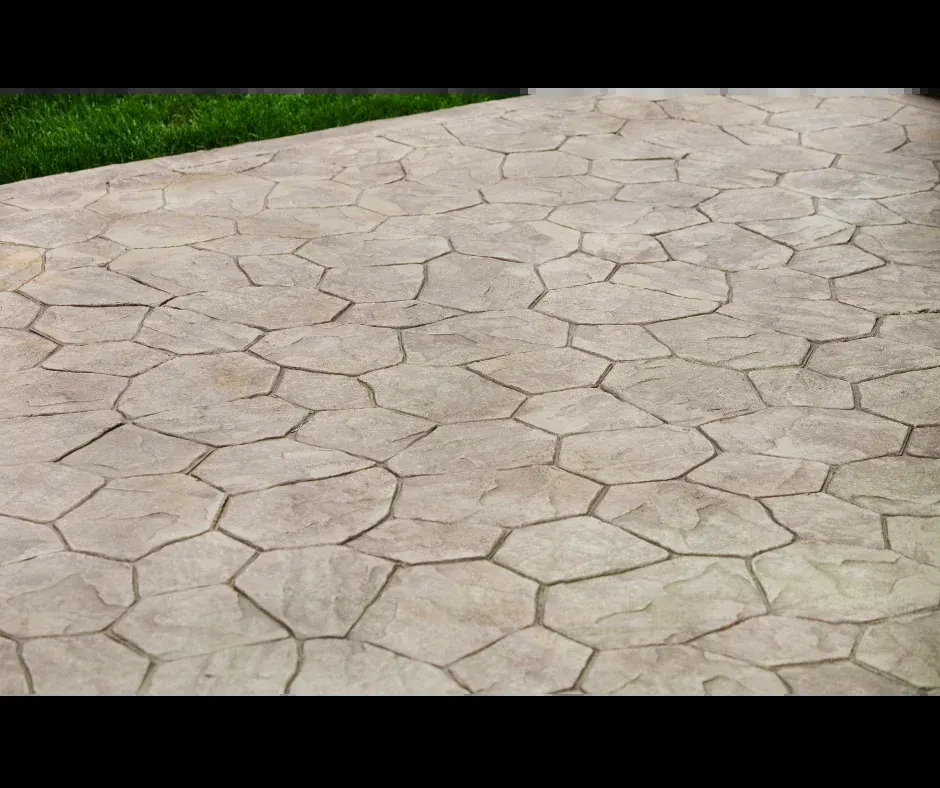
Stamped concrete is ordinary flatwork with a pattern pressed into the surface while it's still workable, and color added to the mix or to the surface. Done right, it gives you the look of cut stone, slate, brick or wood plank without hundreds of separate pieces to settle and shift. Royal Palm Beach Concrete Co builds stamped and colored slabs for homeowners across the county, from the Village to Wellington, Greenacres and West Palm Beach.
It's also the most rule-sensitive finish we pour. The slab under the pattern follows the same rules as a plain slab. But the street end of a stamped driveway can be restricted, an HOA or an architectural board may care about the pattern and color, and the finish needs upkeep that a broom finish doesn't. This page lays those out first, so the design talk starts from what you can build on your lot. The estimate is free and written, and it lands before any work begins.
Where Stamped Work Goes: Patios, Entries, Walkways and Driveways
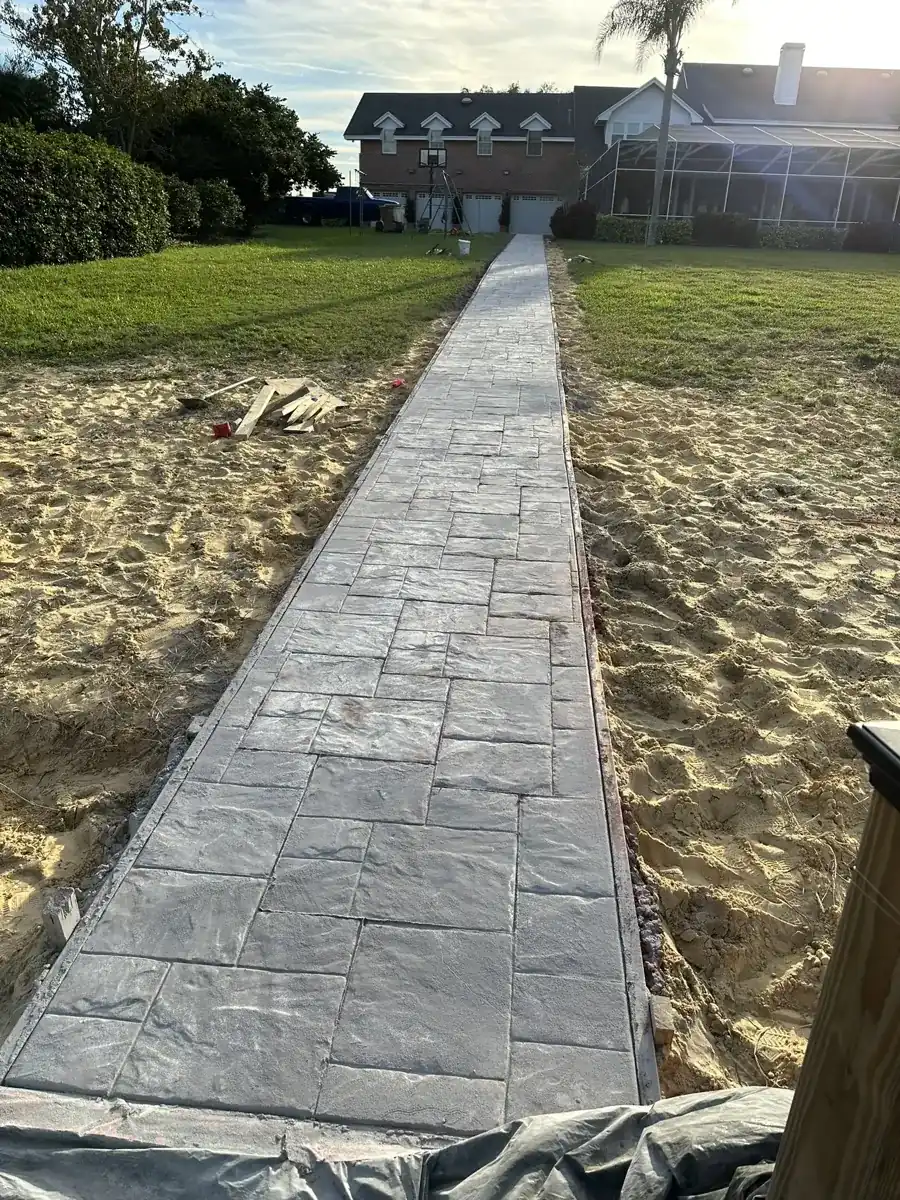
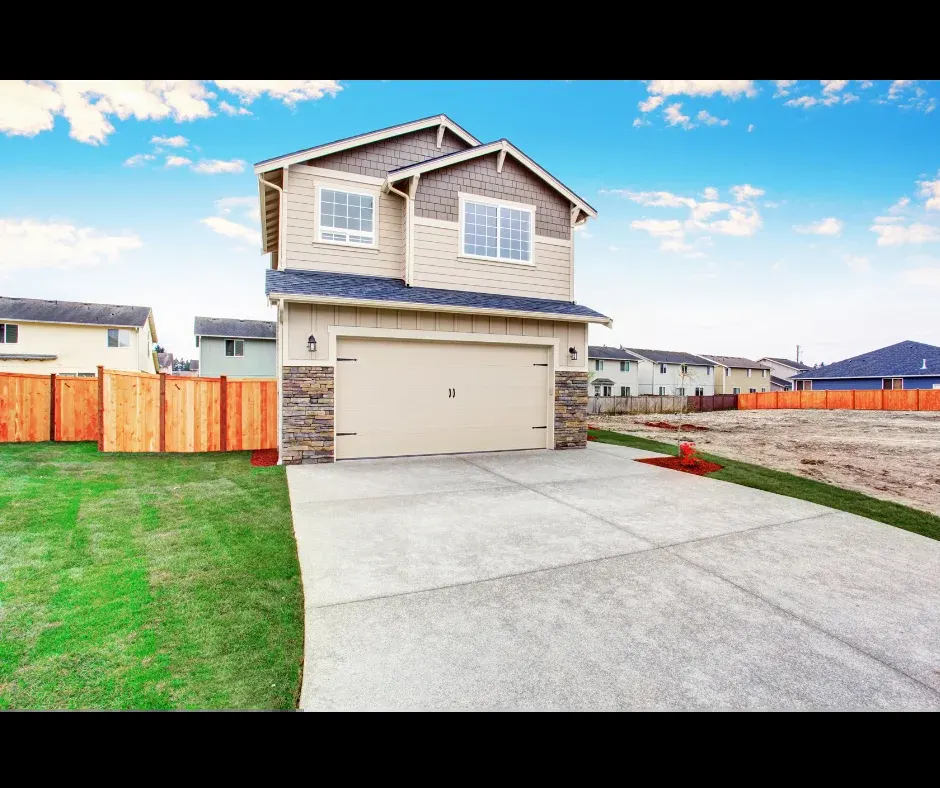
Stamped work fits a patio or back slab well, because those sit inside the lot, away from right-of-way rules, and you see the pattern up close. A front entry works too: a stamped landing at the door with a plain broom walkway to the street puts the money where it shows. Driveways can be stamped as a field or a border, though the apron needs the most care. See our pages on patios, walkways and driveways for the plain version of each job and the base work they share.
Before you commit, we bring samples and look at the house, the roof color and the pavement you already have. Further down, we cover how to pick color, pattern and texture.
What It Costs
Typical stamped and decorative prices across our service area.
| Stamped and decorative concrete | $12 to $20 | $3,600 to $12,000 for about 300 to 600 sq ft with pattern, color and sealer | Pattern detail, color layers, steps and edges, access |
|---|---|---|---|
| Plain broom patio, for comparison | $7 to $13 | $1,750 to $5,850 for about 250 to 450 sq ft | Size, access, tie-in |
What Wellington, ITID and County Roads Allow at the Street
| Where | What the rule says | What we do |
|---|---|---|
| Wellington | The Driveway Affidavit prohibits any coating, including paint or decorative texture, in the public right-of-way; code bars coloring or sealing aprons and sidewalks there | Plain concrete apron to the Village packet, pattern starts at the property line |
| The Acreage (ITID easement) | Paver blocks and stamped concrete in the easement are subject to removal and aren't replaced by the District | Plain 6 inch concrete across the culvert, stamped field on your side |
| County-maintained roads | Stamped concrete and decorative pavers aren't permitted in the right-of-way without a recorded removal agreement | We supply the dimensions you need for the agreement, or keep the apron plain |
| Royal Palm Beach | The Village driveway sheet specifies 6 inch concrete across the swale | Plain 6 inch swale crossing to the sheet, pattern behind it, and ask the Village to confirm the finish at permit |
Wellington's design standards award a stamped concrete driveway the same 10 design points as a paver driveway on a new home, so the finish counts when a new house is built there. The pages for Wellington and The Acreage go deeper on those two systems.
How the Job Goes
Design visit
We bring samples, check rules for your address and measure.
Written quote
A detailed quote lists pattern, color, sealer and permit steps.
Pour and stamp
We pour, color and stamp in one window, then cut joints.
Seal and care
We seal when cured and give you a reseal schedule.
How a Stamped Slab Is Built, from Base to Sealer
- Design and sample. We agree pattern, color and where each starts and stops, and mark the lot with paint before anything is dug.
- Base and forms. The base is graded, compacted and formed exactly like a driveway or patio, because stamping won't hide a weak subgrade.
- Pour and color. We place and float the pour. Color goes in the mix or on the surface, depending on the look you chose.
- Stamp. A release agent keeps the mats from sticking. We press the mats in while the slab is workable but firm, tamp them, and finish the edges with detail tools.
- Joints and cure. Control joints are cut after the slab hardens, planned along pattern lines so they read as part of the design. Curing starts right away and runs at least three days.
- Clean and seal. We wash off the release agent, and the sealer goes on once the slab is dry and cured.
Choosing Color, Pattern and Texture Before the Pour
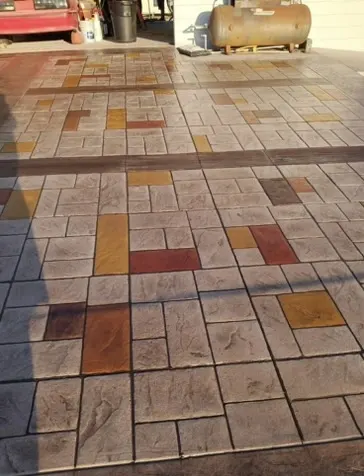
Decide these three things in this order. First the pattern, because it sets the scale: large-format stone suits a big patio and feels cramped on a small one, running-bond brick suits a straight walk, and a random slate pattern forgives odd shapes. Second the base color, which should relate to the roof, the trim and any pavement you already have. Third the texture depth, which decides how much dirt the grooves hold and how the surface feels underfoot.
Keep the palette short. A base color with one accent reads as designed. Three colors start to look busy. Colors on a sample board look different in full sun on a finished slab, so we look at samples outdoors against the house. Steps, landings and the path to the mailbox are the places to choose a grippier texture, and a border around a plain field is a way to get the look on a smaller budget.
Slip Resistance, Sun and Resealing in South Florida
The pattern's texture is often more slip resistant than a trowel-smooth slab, but it can still get slippery when wet or when a film-forming sealer is on it. In a high-traffic area such as an entryway, a heavier texture or a non-skid additive in the sealer increases grip. We ask where the water will land before we choose a sealer.
Sealer isn't a one-time job. The finish needs periodic cleaning and resealing, usually every two to three years. The upkeep cost is a real part of the decision, so we put it in writing.
Stamped Concrete or Pavers: A Straight Comparison
We pour, so we only compare from that side, and the case for pavers is real. Pavers come as individual units, so a single stone can be lifted and replaced after a repair underneath. They look finished immediately, with no cure period. The pour is a single slab. It has no joints between units for weeds to grow in, so a broom keeps it clean. It can crack along a joint or at a stress point like any slab, so we lay joints to steer cracks into pattern lines.
Price is a fair question too. Stamped work is a premium finish, and a plain broom slab is the cheaper way to get a hard surface. If you want a look rather than a particular material, bring us the paver quote and we'll price the stamped option beside it.
HOA, Historic Districts and Design Review
Florida law lets an HOA review plans for the location, size, type or appearance of an improvement only as far as its declaration and published guidelines allow, and it must apply those standards evenly. So your community may have a color list or a pattern rule, and approval is separate from the building permit. Wellington's permit office does not check with private associations before issuing, so you handle that step yourself. Wellington's Architectural Review Board meets on the fourth Wednesday of the month and sets schedules of approved colors and materials.
West Palm Beach has its own overlay: in its historic districts, the city notes that brick pavers, concrete driveway ribbons and poured slab driveways are traditional, and decks and patios get a staff review. A brick or stone pattern is sensible there if it suits the home, and we recommend checking with the Historic Preservation staff first. For the permit side, see the permits guide.
Planning the Job: Samples, Layout and Timing
You judge this finish by what you see after the sealer dries, so we decide on samples. We bring color chips and pattern mats, lay a few out on the ground in daylight and look at them next to the roof and trim. We mark where each pattern starts and stops with paint, agree where borders fall, and settle which edges get an accent. Nothing about the layout should be a surprise on pour day.
Timing matters more here than on a plain job, because the pour, the color and the stamp all happen in one window. Rain or high wind in the forecast moves the date, since the mats and release agent need a surface that's neither too soft nor too stiff. Tell us about gates, pets, sprinklers and anything else that could touch the surface in the first days. Keep cars off for at least a week, and follow the written aftercare sheet we leave, which also lists when the first cleaning and sealing should happen.
Pour Day Logistics: Access, Covering and Protection
A patterned slab leaves little room for delays. The truck has to reach the forms on schedule, because color and stamping depend on the surface being at the right stage, and a long wheelbarrow carry shortens that window. So we walk the access route with you: gate width, soft lawn, irrigation heads, overhead lines and where the truck can stand. A pump is sometimes cheaper than hand carrying, and it goes in the quote as its own line.
Everything near the work gets covered or moved: planters, siding, window frames, door thresholds and the neighbor's fence line. Plan for a pour that starts early and finishes in the afternoon, with cleanup and covering after. Wash water goes where it won't reach a storm drain or a swale. On the following days the surface needs protection from rain, sprinklers, pets and foot traffic until we tell you it's ready.
What Stamped Concrete Costs: 400 and 500 Square Feet
Stamped concrete in Royal Palm Beach runs $12 to $20 per square foot, which covers the pattern, the color and the sealer. A typical project of 300 to 600 square feet lands between $3,600 and $12,000. A 400 square foot stamped patio is $4,800 to $8,000 at those rates; a 500 square foot entry and walk combination is $6,000 to $10,000. Multi-pattern jobs run higher. Deeper tear-out, curved borders, steps and long hauls add cost. The driveway cost guide explains how the base work is priced. All of this is a range until we see the site, and the free written estimate itemizes the pattern, color and sealer as separate lines.
Get a Free Written Estimate for Stamped Concrete in Royal Palm Beach
Tell us the area where you want stamped concrete in Royal Palm Beach, the look you want and whether any of it meets a street or an easement. We visit, bring samples and check the rules for your address, then send a detailed written quote before any work begins. Stamped jobs also come up in West Palm Beach and Greenacres. Have your survey, any HOA guidelines and photos of the area ready if you can. We'll walk through the pattern options, the sealer schedule and the permit steps in one visit. To get started, use the contact page, or check the service area for your town.
Questions We Get
Is the surface slippery when wet?
Should I choose stamped concrete in Royal Palm Beach, or pavers?
How often does it need resealing?
Can a stamped driveway go all the way to the street?
Will it crack?
Will my HOA approve it?
Can it match my existing patio?
How much more than plain?
Sources we used
- Stamped Concrete Basics, Concrete Network
- Residential Driveways, Palm Beach County Engineering
- ITID Driveway Installation, Repair and Removal Policy, Indian Trail Improvement District
- Driveway Packet, Village of Wellington
- Architectural Review Board, Village of Wellington
- Florida Statutes 720.3035, Florida Legislature
- Driveway Standards, Residential, Village of Royal Palm Beach